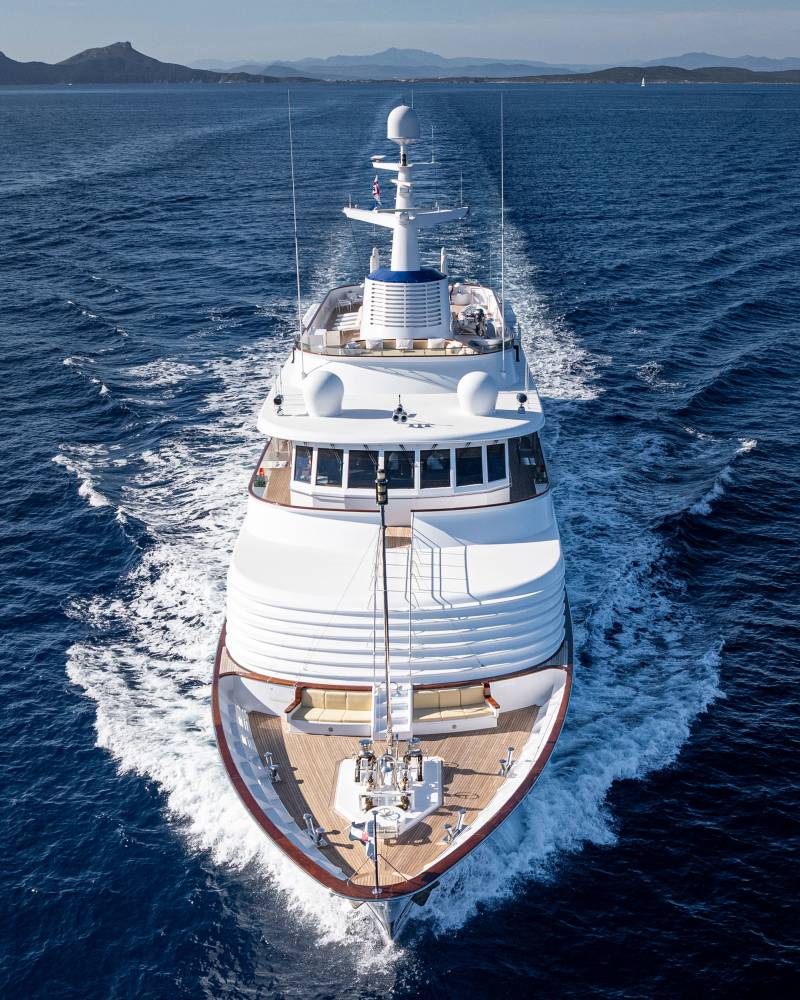
How a Superyacht Crosses the Ocean
A transatlantic crossing follows a tried-and-tested seasonal rhythm. In late autumn, yachts leave the Mediterranean for the Caribbean. Gibraltar is usually the first stop for duty-free fuel, before they turn southwest toward the Canary Islands. “The Canaries serve as a final stop for fuel, supplies or a safe harbour,” Hume explains. From there, the route angles west-southwest into the Atlantic trade winds.
The return journey happens in spring. “Yachts leave the Caribbean for the Mediterranean in summer. They sail northeast from the Caribbean to the Azores, where they refuel and resupply before reaching mainland Europe.”
The distance between the Western Med and the Caribbean is about 4,000 nautical miles. At an average cruising speed of 12 knots, the crossing takes around 14 days. Captains add about a week on either side to catch the best weather window.
Not Every Yacht Is Built for This
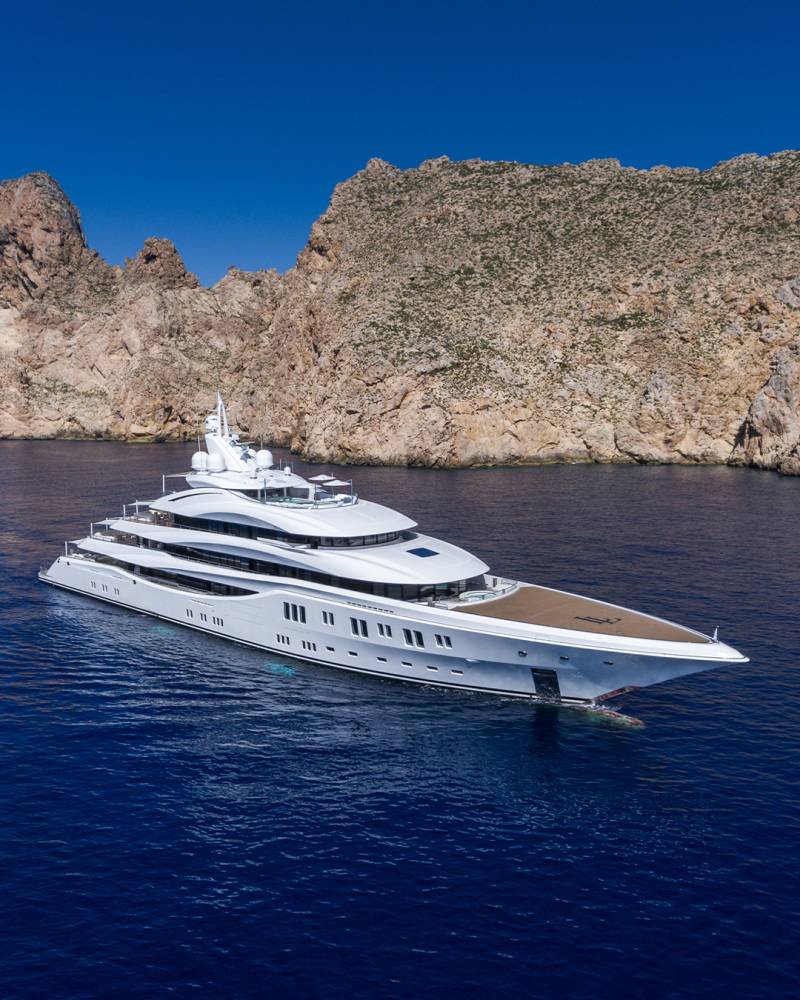
There is a common misconception that all large yachts can simply point west and cross an ocean. Hume is direct: “Not every polished yacht is designed for ocean crossings.”
Ocean-capable yachts share key characteristics:
- Long-range capability at a practical speed
- Fuel reserves for detours
- Strong, stable, high-displacement hulls
- Redundant systems for engines, generators, steering and communications
- Tank volumes and cold storage that support two to three weeks offshore
- Shipyards with proven long-distance expertise
- Crews who understand open-ocean seamanship
“Above all, they are constructed by yards that understand long-distance cruising and operated by crews who know how to safely take a yacht across an ocean,” he says.
Range and redundancy matter just as much as size, and comfort is a design feature, not a coincidence.
What the Crew Does Before Departure
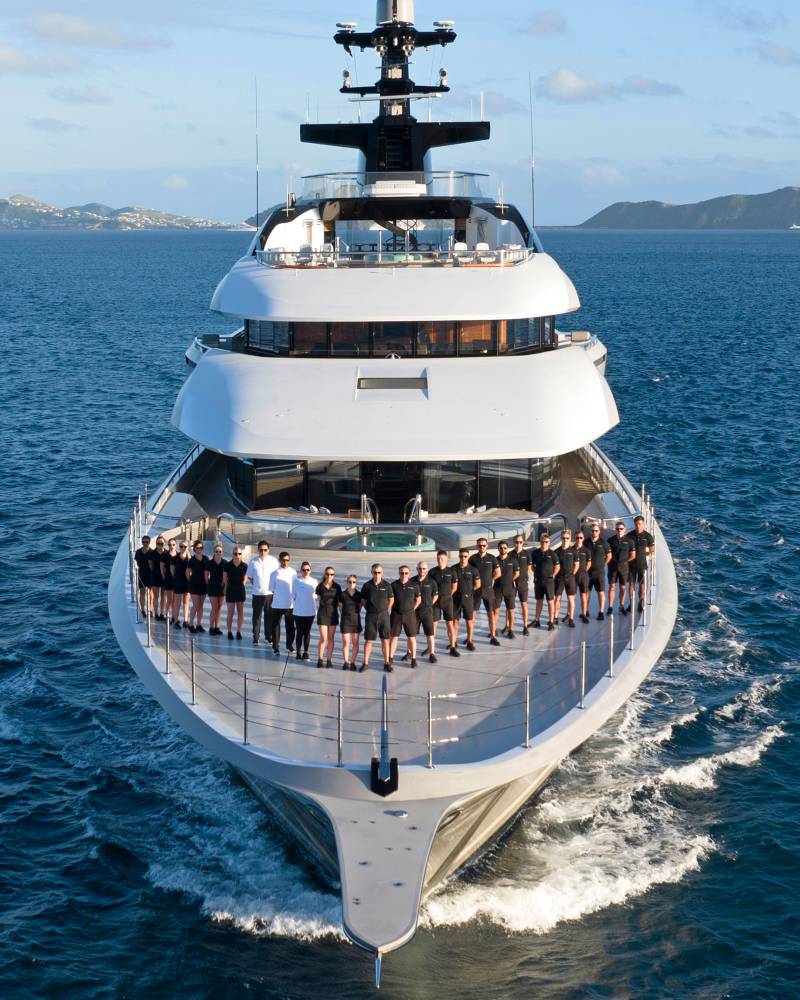
Guests rarely see the level of preparation behind a crossing. In the weeks leading up to departure, every department has its own checklist.
“In the weeks before any ocean crossing, every department is busy,” Hume explains.
- Bridge team: passage planning, fuel calculations, pressure-system monitoring, ports of refuge, safety drills, customs and stowage.
- Engineering: servicing all machinery, testing safety gear, securing technical spaces and verifying spare parts.
- Interior: stowing the vessel and reviewing medical supplies.
- Galley: provisioning enough for two or three weeks at sea.
It is a full-vessel operation that runs with military precision.
Weather, Trade Winds and Timing
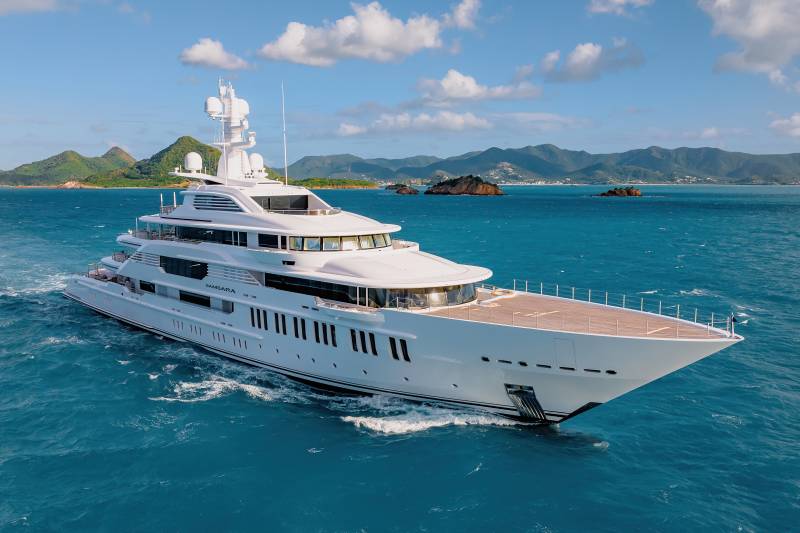
Good captains work with the Atlantic.
Hume breaks the timing down clearly: “Yachts usually depart Europe for the Caribbean at the end of November to exploit the north-easterly trade winds, which strengthen and stabilise in December and January.” These winds sit behind the yacht, giving smoother motion and a gentle push that improves fuel efficiency.
The eastbound migration takes place in April or May. “The north-easterly trades weaken and the Azores High extends across the North Atlantic. This transition signals the time when conditions start to favour an easterly route.”
Modern weather routing keeps the crossing comfortable. Daily route adjustments keep the yacht clear of storm centres and allow for detours when needed.
Can a Yacht Survive Heavy Weather?
A highly searched question online: Can a yacht survive rough seas?
Hume's answer is straightforward. “Yes, a well-built superyacht can withstand very severe weather. However, good seamanship involves avoiding the worst conditions.”
Modern data, forecasting and constant route monitoring give crews the visibility they need. If seas build, “the yacht will reduce speed and may alter course to ensure safety and comfort.”
Avoidance is the strategy. Strength through design is the insurance.
Routine Crossing vs Strategic Migration
A crossing is not simply a delivery trip. For charter yachts in particular, it is part of a bigger seasonal plan.
“A routine crossing simply involves moving from A to B safely,” Hume says. “A strategic migration views the crossing as part of a broader commercial and annual operational plan.”
Timing matters for:
- Charter calendars
- Major events
- Shipyard periods
- Crew rotations
- Training and rest
Planning the crossing around these elements ensures the yacht arrives ready, not mid-refit or understaffed.
The Future of Ocean Crossings
Owners are travelling further and asking for more ambitious itineraries. “Owners are increasingly interested in exploring less common cruising destinations,” Jamie says. This includes remote archipelagos, high-latitude regions and multi-year itineraries.
Explorer yachts are growing in demand. So are hybrid propulsion systems, alternative fuels and energy-efficiency technologies. Connectivity is transforming too. “Starlink has revolutionised maritime communications,” Hume explains. It improves safety, but also keeps owners and guests connected across most of the globe.
With the right vessel, the right crew and the right weather window, a transatlantic crossing is smooth, strategic and remarkably comfortable. As Hume's insight shows, the answer is simple: yes, a yacht can cross oceans, and it can do so with ease.